
© Sergei A., unsplash
InvisibleDAC
Development of efficient technologies and system integration for removing CO₂ from the air in buildings.
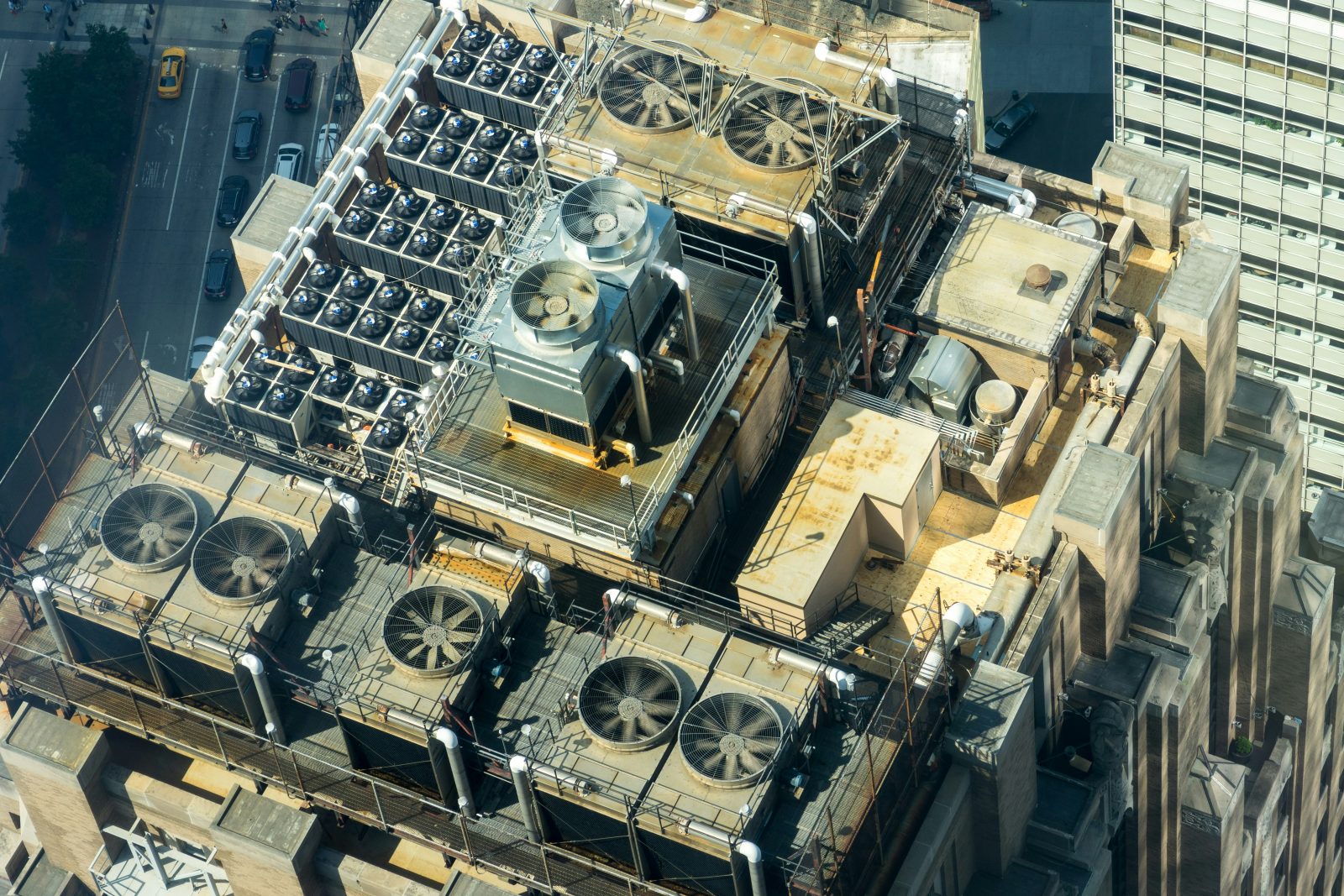
Development of compact, modular devices for direct air capture and their integration into ventilation systems of large buildings, including the evaluation of logistics options for the captured CO2. The project will further advance the concept and a selected DAC technology toward industrialization. The goal is to demonstrate the technology under real-world conditions to lay the groundwork for technical product development.
Project management
Prof. Dr.-Ing. habil. Roland Dittmeyer
Karlsruher Institute for Technologies (KIT)
Projekt duration
01.02.2026 – 31.01.2029Project partner
Prof. Dr.-Ing. habil. Roland Dittmeyer, Karlsruher Institut für Technologie (KIT)|, Universität Hamburg |, Robert Bosch GmbH|, TLK-Thermo GmbH|, MANN+HUMMEL GmbH
Project goals
According to studies, several million tons of CO₂ per year will need to be removed from the air in Germany by 2045 using direct air capture (DAC). InvisibleDAC is developing modular DAC systems that can be seamlessly integrated into building ventilation systems. Compared to large-scale DAC plants, such systems offer several advantages, particularly in densely populated countries. Among other things, faster implementation is expected. This is facilitated by simpler permitting processes and the use of existing technical infrastructure. Additionally, no additional land is required for new plants. Increased productivity is also anticipated due to higher CO₂ concentrations indoors.
As the exhaust air from the ventilation system flows through the DAC system, it comes into contact with a liquid solvent that specifically binds the CO₂ contained in the exhaust air. When the air leaves the DAC system, it is largely free of CO₂. Electrochemical processes can be used to release the CO₂ from the solvent again. The captured CO₂ can then be collected via suitable infrastructure for permanent underground storage at specific locations (e.g., in the North Sea region). It can also be converted into sustainable products. Of particular interest here are, for example, durable recycled building materials and carbon-based construction materials. Chemical products (e.g., plastics) or fuels for specific applications that cannot be electrified are also conceivable.
The project will further advance the concept and a selected DAC technology toward industrialization. In addition to research on DAC technology and its integration into building systems, various options for CO₂ logistics are also being investigated.
By integrating innovative ventilation systems with built-in DAC systems into people’s daily lives in the future, everyone could make a tangible contribution to CO₂ capture simply by breathing.