
CDRterra in Conversation –
CO₂ removal on land
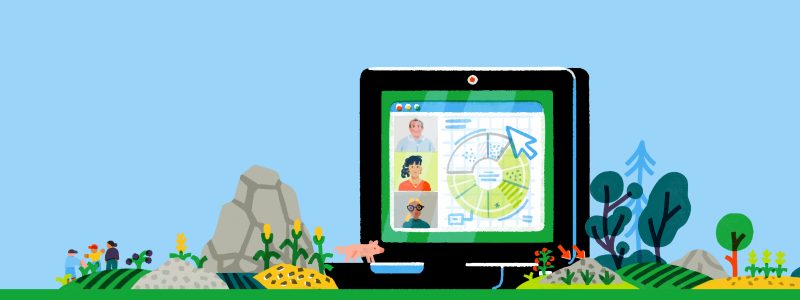
© Ève Barlier, CDRterra
How much CO₂ can realistically be sequestered through rock dust, changes in land use, carbon farming, and changes in the food system? And what conflicting goals arise in the process?
In this series of CDRterra Webinars we invite you to listen to our researchers, who will present their latest findings. The series kicks off in June with four topics related to land-based CO₂ removal—more sessions will follow.
Four sessions in June, 11 a.m.–12 p.m.:
June 1 – How much CO₂ can rock dust sequester in fields – and what does that have to do with house walls?
June 3 – Carbon farming: Realistically assessing climate protection potential, leveraging added value
June 15 – CO₂ removal in Germany: How much is realistic – and where?
June 29 – CDR in the food system of the future: Scenarios for a 1.5-degree-compatible transformation
The series is aimed at experts from science, politics, administration, and the field, as well as anyone with a deep interest in CO₂ removal.
Monday, June 1, 2026, 11:00 a.m.–12:00 p.m.
How much CO₂ can rock flour sequester—and where is its use most effective?
In enhanced weathering, rock is finely ground and spread across fields. There, it reacts with water and CO₂, thereby sequestering carbon over the long term.
To kick off the webinar series “CDRterra in Conversation,” researchers will present key findings from their work:
Dr. Tobias Linke (University of Hamburg & PyMiCCS) will present results from laboratory, greenhouse, and field studies: How quickly does rock flour weather? What effects does it have on soils and plants?
Dipl.-Ing. Kolja Kuse (Technocarbon Technologies, DACCUSS) will present CO₂-negative building materials: The project developed and tested house wall prototypes made of carbon fiber stone and biochar—with potential for CO₂ storage and for substituting emission-intensive materials.
Wednesday, June 3, 2026, 11:00 a.m.–12:00 p.m.
Carbon Farming: Realistically Assessing Climate Protection, Leveraging Added Value
Carbon farming encompasses agricultural practices that can sequester carbon in soils and biomass, such as through cover crops, agroforestry systems, or perennial crops.
Analyses by Veronika Strauss (Leibniz Centre for Agricultural Landscape Research & GONASIP) show that the contribution of carbon farming to CO₂ removal is limited. At the same time, these practices can strengthen soils, promote water balance and biodiversity, make agricultural landscapes more resilient, and contribute to the provision of socially desirable public goods.
As part of the CDRterra webinar series, Veronika Strauss will discuss key findings from the project. The focus will be on realistic climate protection potential, impacts on ecosystem services, key implementation barriers, and possible governance approaches to promote carbon farming.
Monday, June 15, 2026, 11:00 a.m.–12:00 p.m.
CO₂ Removal in Germany: How Much Is Realistic—and Where?
Where in Germany can CO₂ removal methods actually be implemented? And what does this mean in concrete terms for agriculture, forests, and land use?
Over the past four years, various land-use scenarios have been systematically analyzed. Based on this, Dr. Maximilian Witting and Dr. Felix Gulde (Ludwig Maximilian University of Munich & STEPSEC) will demonstrate how much CO₂ could be sequestered and what conflicting goals arise.
The researchers will present their findings and showcase the STEPSEC web portal they developed: Interactive maps allow users to see how different measures impact land areas, emissions, and environmental effects.
Monday, June 29, 2026, 11:00 a.m.–12:00 p.m.
CDR in the Food System of the Future: Scenarios for a Healthy, Environmentally Friendly, and Social Transformation
A transformation of the food system must achieve more than just climate protection: it should reduce hunger, enable healthier diets, lower environmental impacts, secure a good livelihood in agriculture, and keep food affordable.
At the same time, even with reduced meat consumption, more efficient production, and less food loss, emissions will persist — for example, from livestock farming or fertilization.
Dr. Benjamin Bodirsky (Potsdam Institute for Climate Impact Research & ABCDR) uses modeling to demonstrate how food systems can evolve in line with the 1.5-degree target, the role that land-based CO₂ removal plays in this process, and the guidelines needed to avoid unintended side effects.