
New STEPSEC Website Showcases Opportunities and Challenges for Land-Based CDR
Explore Research Findings Through an Interactive Platform
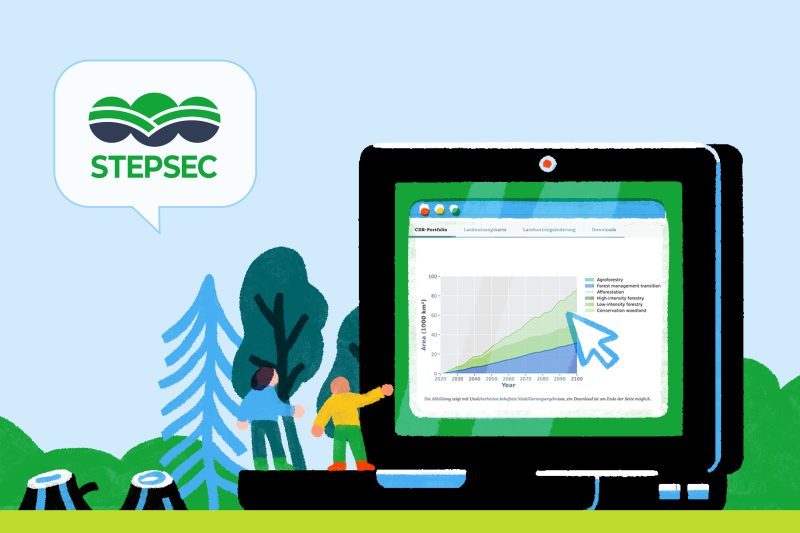
The STEPSEC consortium has made its research findings accessible to a broad audience through a new interactive website. Rather than presenting scientific reports, the platform focuses on intuitive visualisations and interactive maps. These illustrate how different land-use scenarios may influence the implementation of land-based Carbon Dioxide Removal (CDR) approaches and highlight the associated potentials, synergies, and trade-offs.
The website provides an accessible entry point to the project’s findings and supports informed dialogue between the scientific community, policymakers, and practitioners.
Challenges for the Deployment of Land-Based CDR
A key finding of the project is that the large-scale deployment of land-based CO₂ removal faces significant challenges already today, regardless of how future land use develops.
These challenges include the limited availability of suitable land, the need to protect ecosystems and biodiversity, and the establishment of appropriate policy and regulatory frameworks. Addressing these issues will be essential to enable the long-term, sustainable, and large-scale implementation of land-based CDR approaches.
Explore the STEPSEC Website
The new website invites users to explore the project’s findings interactively and examine different future land-use scenarios for Germany.
CDRterra would like to thank Maximilian Witting, Karina Winkler, Felix Gulde, Christian Lindner, and Zoe Morhard for developing and implementing the website.