
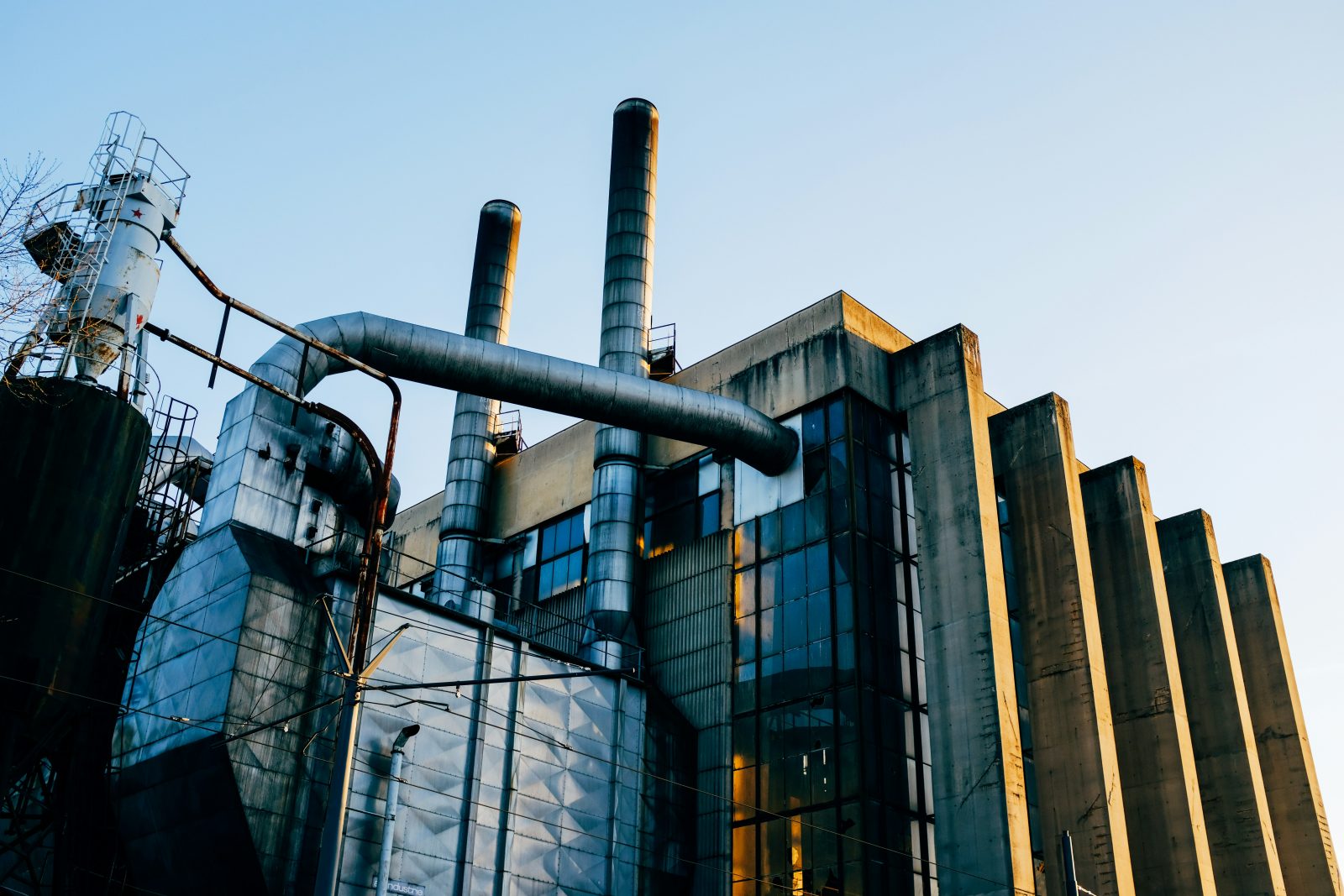
© Alexandre Lallemant, unsplash
CarbonateClusters
develops Carbonate Looping Clusters for the Carbon Capture from biomass combustion plants.
The CarbonateClusters project is developing a BECCS technology to enable negative CO₂ emissions, thereby supporting climate neutrality. This involves storing CO₂ locally in small-scale biomass combustion systems in the form of carbonates, and subsequently releasing and storing it in large-scale calcination plants. Key innovations in this project include the electrically heated steam calciner and a new concept for CO₂ adsorption based on hot-gas cartridge filters.
Project management
Prof. Dr.-Ing. Jürgen Karl
Friedrich-Alexander-University Erlangen-Nürnberg (FAU)
Projekt duration
01.07.2026 – 31.06.2029Project partner
Prof. Dr.-Ing. Jürgen Karl, Dr.-Ing. Maximilian Weitzer, Henrik Hollederer, Prof. Dr. Mario Liebensteiner, Friedrich-Alexander-University Erlangen-Nürnberg (FAU)|Felix Nelles, Dr.-Ing. Steffen Leimbach, Litherm
Project goals
In light of the urgent need to reduce greenhouse gas emissions and actively remove already emitted CO₂ from the atmosphere, negative emission technologies are becoming increasingly important. However, a significant technological gap remains in the heating sector, which is largely characterized by decentralized biomass plants: practical and cost-effective CO₂ capture solutions for small- and medium-scale installations are still lacking. The CarbonateClusters project addresses this key challenge on the path toward climate neutrality.
The project focuses on two central research questions: How can the established carbonate looping process be adapted for decentralized, small-scale biomass systems? And how can innovative technologies enable high CO₂ capture rates while maintaining strong energy efficiency and economic viability?
The objective is to develop so-called “Regional Carbonate Looping Clusters”. This concept involves capturing biogenic CO₂ directly at numerous small biomass combustion plants and subsequently releasing it at larger, regional facilities. Two key technologies are at the core of this approach: an electrically heated steam calciner that produces highly reactive calcium oxide (CaO), and a novel CO₂ adsorber based on hot gas filtration, enabling efficient capture at elevated temperatures. In addition, the project analyzes economic and societal aspects to assess the technology’s market potential and public acceptance.
The project is based on the Carbon Dioxide Removal (CDR) method Bioenergy with Carbon Capture and Storage (BECCS). In this process, CO₂ is captured from flue gases by reacting it with CaO to form calcium carbonate (CaCO₃). This compound is then decomposed in a central calciner, releasing concentrated CO₂ that can be permanently stored in geological formations. By using renewable energy in the process, the system enables net-negative emissions.